HAPI Champions Inclusive Menstrual Health and Dignity for Women and Girls with Disabilities in Nigeria
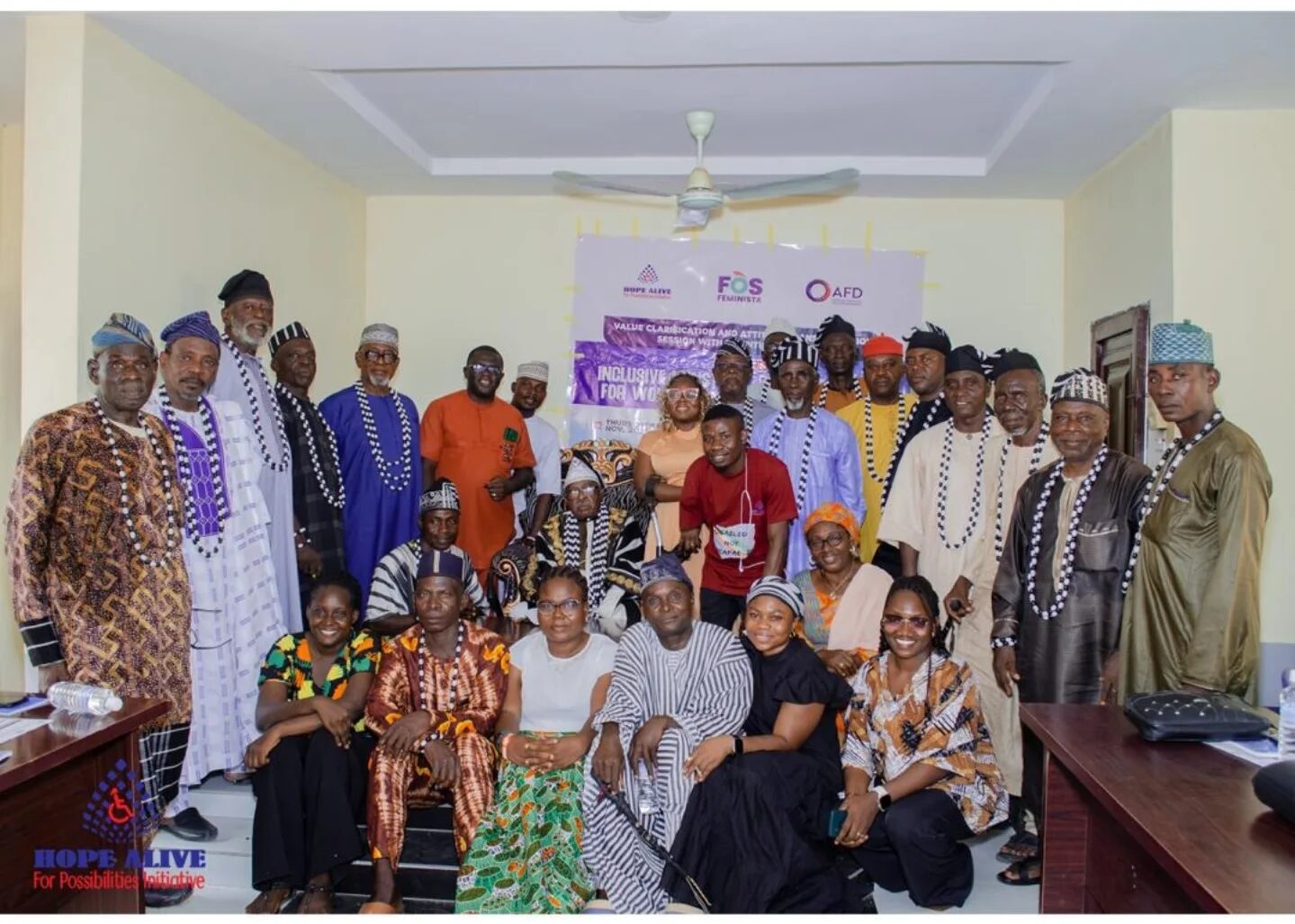
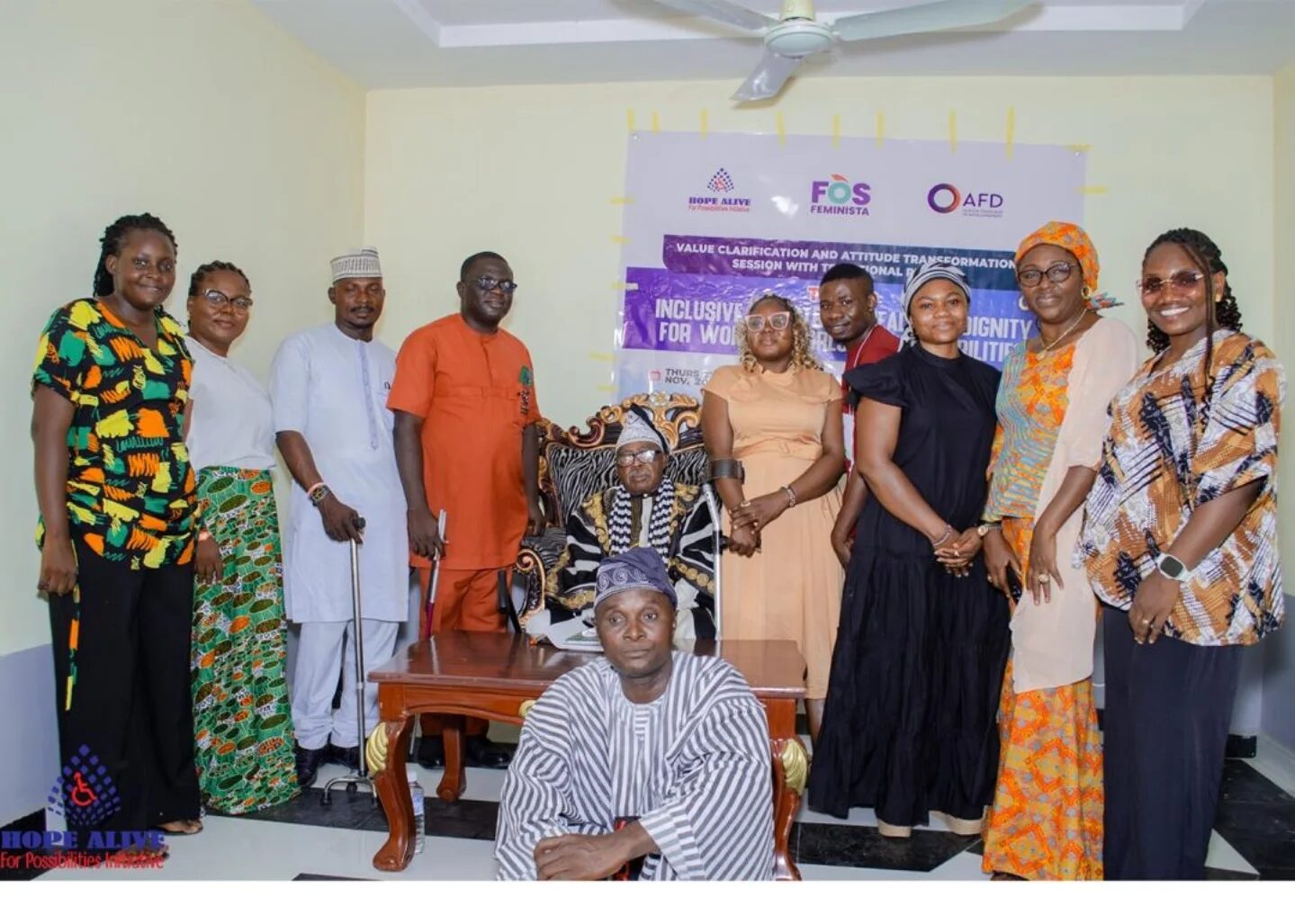
On the 27th November, 2025, Hope Alive for Possibilities Initiative had a Value Clarification and Attitude Transformation (VCAT) session with Traditional Rulers on the issue of menstrual dignity, hit with uncomfortable clarity at the Makurdi Traditional Cabinet Office.
The session, led by D’brave Jennifer Goodwaters, a young woman with a disability, opened a window into a reality many never have to think about. She spoke plainly: sanitary pads have become a luxury item. With inflation pushing prices up by nearly three times in just three years, something as basic as menstrual products is now out of reach for countless women and girls with disabilities.
For women who already face higher unemployment rates, limited economic opportunities, and systemic exclusion, this price surge is not just inconvenient — it is dangerous. Many are forced into coping strategies that compromise their health, safety, and dignity:
- wearing pads for far longer than medically safe,
- borrowing used or leftover products,
- or resorting to unsafe, improvised materials.
What should be a simple monthly necessity has turned into a quiet emergency.
The Bigger Picture: A Public Health Issue We Can’t Ignore
We were equally privileged to learn from Dr. Laadi Swende, a family physician and daughter of parents with disabilities. She widened the lens, reminding us that this crisis is not isolated. Citing UNICEF, she noted that over 37 million Nigerian women and girls cannot afford menstrual products. This is not just a rural problem. It is not just a poverty issue. It is a nationwide pattern of deprivation — one that hits women and girls with disabilities the hardest.
Lack of access to menstrual products deepens social exclusion, heightens stigma, disrupts education, affects mental health, and reinforces cultural barriers that already limit full participation in society. It is a public health concern that has been allowed to stay in the shadows for far too long.
Why Traditional Institutions Matter
Both facilitators were clear: breaking this cycle requires more than empathy. It requires leadership.
Traditional rulers, community leaders, policymakers, and civil society organisations must take up the call to action. Traditional institutions, in particular, carry influence powerful enough to shift harmful norms, break menstrual taboos, and champion inclusive menstrual health at the grassroots.
Their voices can turn silence into awareness, shame into dignity, and barriers into access.
Our Stand at HAPI
Through the #sangpoursang Project, we are committed to pushing for a Nigeria where menstrual dignity is not a privilege but a right. Menstrual health is inseparable from gender equality. It is a human rights issue. It is a public health issue. And it is a disability inclusion issue.
Periods do not pause for inflation.
And menstrual dignity must never be a private burden.
This work is proudly supported by Fòs Feminista and AFD – Agence Française de Développement.
Add Comment