Strengthening Electoral Participation of Women with Disabilities in Benue State
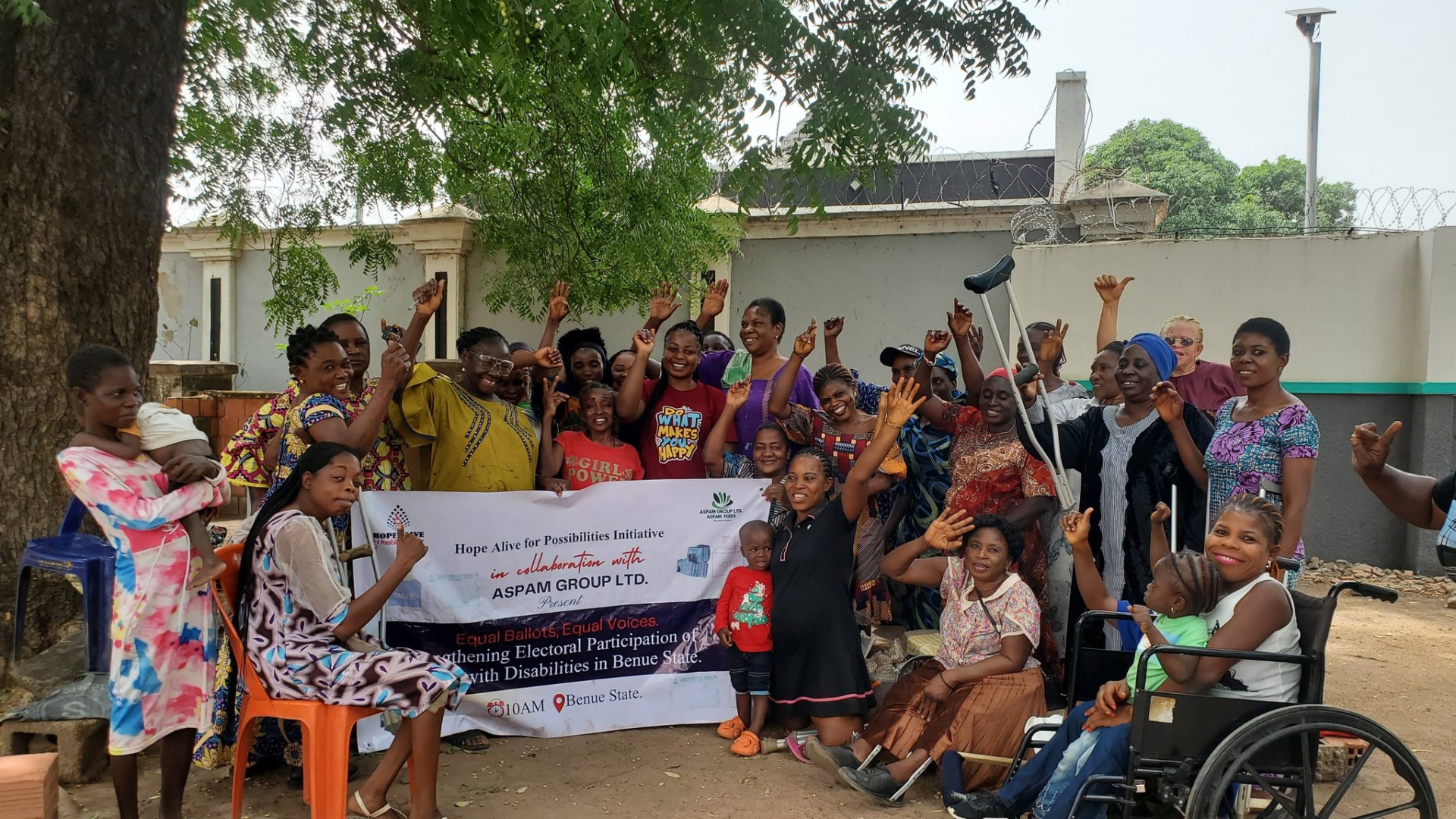
HAPI’s Voterability Campaign in Gboko, Benue State, strengthens the electoral participation of women with disabilities through inclusive civic education and advocacy.
Equal Ballots, Equal Voices:
On Friday, 21 February 2026, Hope Alive for Possibilities Initiative (HAPI), in collaboration with ASPAM Group Ltd., convened a Voterability Campaign in Gboko, Benue State.
The objective was clear: strengthen the electoral participation of women with disabilities and address the systemic barriers that continue to undermine inclusive democracy in Nigeria.
Why Electoral Inclusion Matters
Democracy is weakened when entire populations are excluded from political processes. Women with disabilities remain one of the most underrepresented groups in Nigeria’s electoral landscape.
Their exclusion is not accidental. It is structural.
Women with disabilities routinely face:
- Inaccessible polling units that prevent independent voting
- Absence of voter education in accessible formats such as braille, sign language, or simplified materials
- Attitudinal stigma and discrimination from electoral officials and community members
- Political marginalization within party structures and leadership spaces
When these barriers remain unaddressed, the promise of equal citizenship becomes hollow.
The Voterability Campaign Approach
The Voterability Campaign in Gboko moved beyond awareness slogans. It focused on practical engagement and rights-based empowerment through:
- Civic education sessions tailored to women with disabilities
- Rights-based voter awareness discussions
- Dialogue on inclusive electoral systems and reforms
- Mobilization for active political participation — not just as voters, but as aspirants and leaders
The message was direct: political participation is not symbolic. It is constitutional.
A Clear Message to Nigeria’s Democratic Institutions
Voting is not charity.
Participation is not optional.
Inclusion is a constitutional right.
When women with disabilities vote, contest elections, and engage in governance:
- Policy design becomes more responsive
- Budget allocations become more equitable
- Oversight becomes more representative
- Democracy becomes stronger and more legitimate
Inclusive elections are not about accommodation — they are about justice.
What Must Change
HAPI calls on policymakers, the Independent National Electoral Commission (INEC), political parties, and community leaders to take measurable action:
- Ensure physically accessible polling units
- Provide sign language interpreters and braille ballot guides
- Guarantee priority access without discrimination
- Implement inclusive voter education campaigns across communities
Electoral reforms must move from rhetoric to implementation.
Add Comment