Disability-Inclusive Climate Justice: HAPI Convenes Youths with Disabilities to Document Lived Experiences of Floods and Climate Disasters in North Central Nigeria
Disability-Inclusive Climate Justice: HAPI Amplifies Voices of Youths with Disabilities in Climate Disaster Conversations
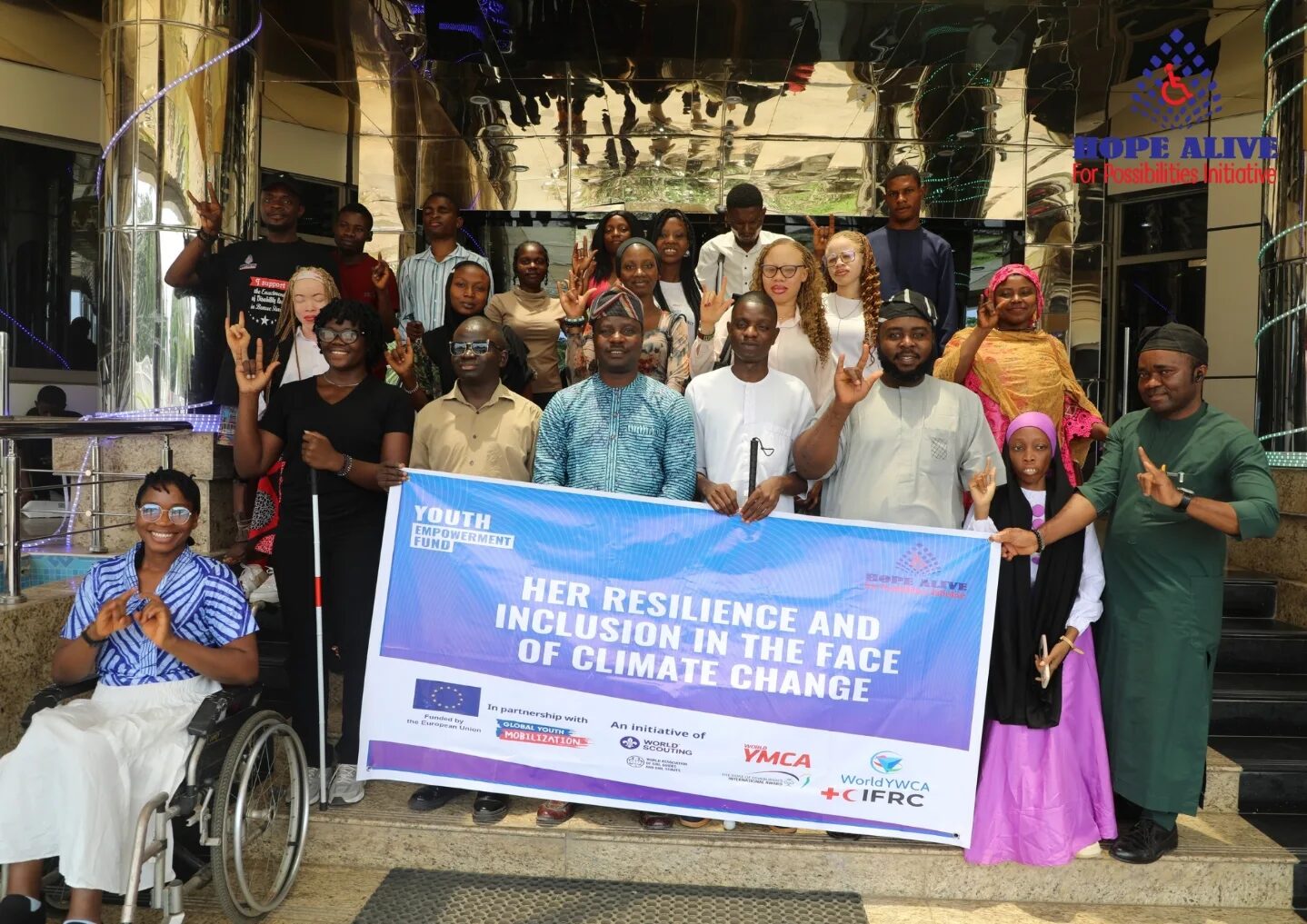
Group photo of Youths with disabilities of HAPI’s climate change roundtable dialogue
Climate change continues to intensify floods and humanitarian crises across Nigeria, yet the voices of youths with disabilities remain largely excluded from emergency response planning and climate policy discussions.
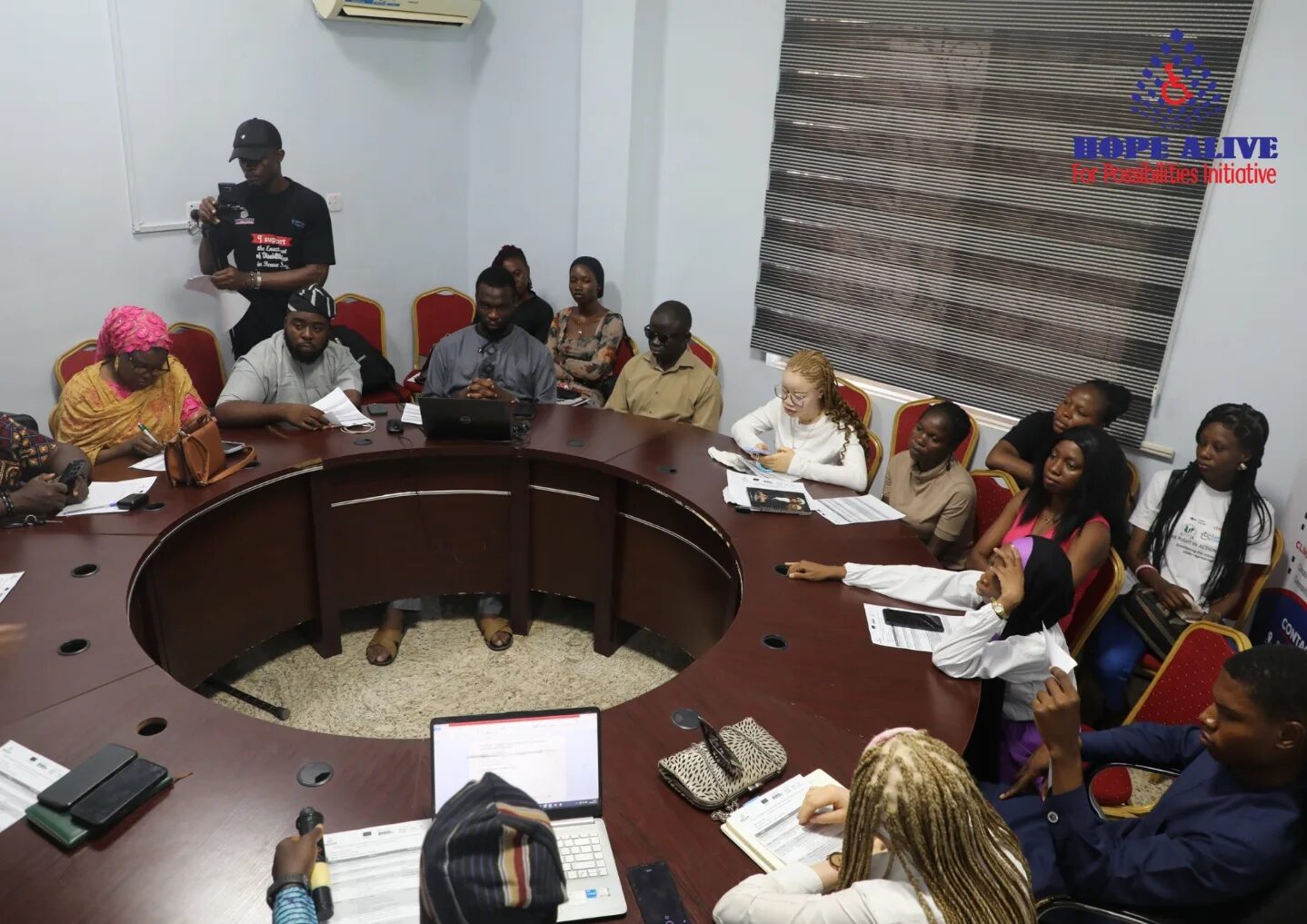
To address this gap, Hope Alive for Possibilities Initiative (HAPI), with support from the EU Youth Empowerment Fund, convened a One-Day Roundtable Dialogue with youths with disabilities to document their lived experiences during floods and climate-related disasters in North Central Nigeria.
The evidence-generation activity created a safe and inclusive platform for participants to openly share the realities they face before, during, and after climate disasters — from inaccessible evacuation systems to exclusion from relief distribution and emergency information.
Why Disability-Inclusive Climate Action Matters
Climate disasters do not affect everyone equally.
For many persons with disabilities, flooding and displacement come with additional barriers, including:
- Inaccessible emergency shelters
- Lack of disability-friendly communication during emergencies
- Exclusion from humanitarian interventions
- Limited mobility support during evacuations
- Increased vulnerability to poverty, isolation, and neglect
These challenges are rarely reflected in mainstream climate policies or disaster response mechanisms.
The roundtable dialogue aimed to bridge this evidence gap by ensuring that the experiences of youths with disabilities are not only heard but documented for policy influence and advocacy.
Youths with Disabilities Share Lived Experiences
Participants at the dialogue shared personal stories highlighting how climate-related disasters disproportionately affect persons with disabilities in their communities.
Discussions focused on:
- Flood displacement experiences
- Accessibility challenges during emergencies
- Barriers to healthcare and humanitarian support
- Community exclusion and discrimination
- The need for inclusive climate policies and disability-responsive disaster planning
The session also encouraged collaborative discussions on practical solutions and recommendations that government institutions and humanitarian actors can adopt to improve inclusion in emergency response systems.
From Dialogue to Policy Action
Beyond discussions, the engagement forms part of a broader evidence-based advocacy effort.
Findings from the roundtable dialogue will inform the development of a 5-page policy brief containing:
- Key findings from participants’ lived experiences
- Identified gaps in emergency response systems
- Actionable recommendations for government institutions and stakeholders
The policy brief will contribute to ongoing advocacy for disability-inclusive climate governance and accountability in Nigeria.
This aligns with HAPI’s broader commitment to advancing disability-inclusive climate justice, leadership, and policy accountability.
HAPI’s Commitment to Inclusive Climate Justice
As a disability rights and inclusion-focused organization, HAPI continues to champion the meaningful participation of persons with disabilities in governance, advocacy, and development processes.
The organization believes that:
“If climate action is not inclusive, it is incomplete.”
By centering the voices of youths with disabilities in climate conversations, HAPI is helping to build stronger, more inclusive, and resilient communities.
Acknowledgement
HAPI appreciates the support of the EU Youth Empowerment Fund for funding this important evidence-generation activity and strengthening youth-led advocacy for disability-inclusive climate action in Nigeria.
Add Comment