Our Period, Our Bodies, Our Dignity, Our Voices
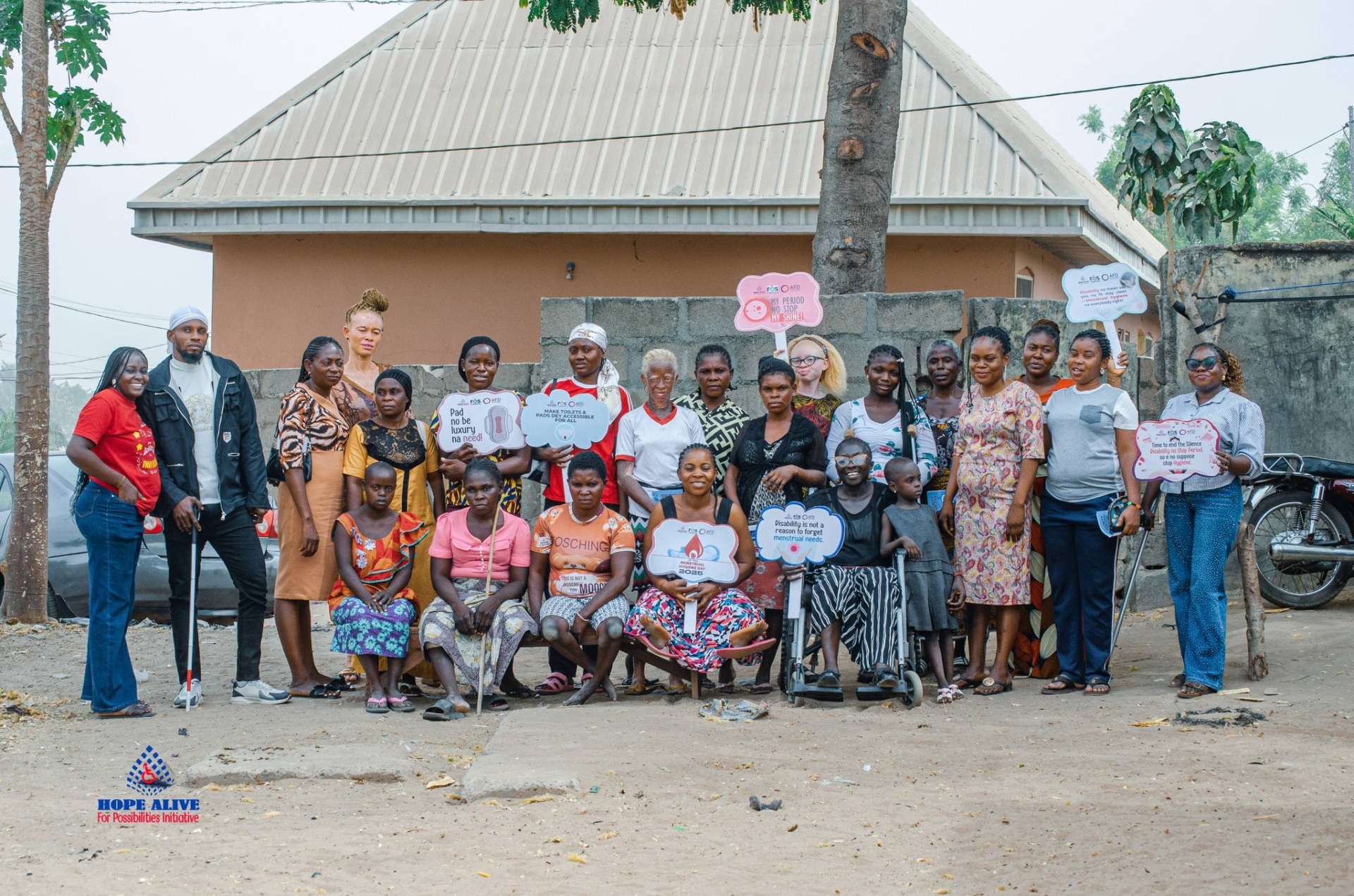
Hope Alive for Possibilities Initiative (HAPI) Group picture of storytelling and experience-sharing session with Women and Girls with Disabilities in Ichwa IDP, Makurdi, Benue State
Centring Girls with Disabilities in Menstrual Health and Humanitarian Response in Benue State
On Tuesday, 17 February 2026, Hope Alive for Possibilities Initiative (HAPI) convened a storytelling and experience-sharing session with girls and women with disabilities from:
- International Market IDP Camp
- Ichwa IDP Camp (North Bank, Makurdi)
- Conflict-affected communities
- Semi-urban communities across Benue State
The session created something rare in humanitarian spaces: a safe, inclusive platform where participants could openly speak about menstruation, disability, and displacement — many for the first time.
What emerged was not theory. It was lived reality.
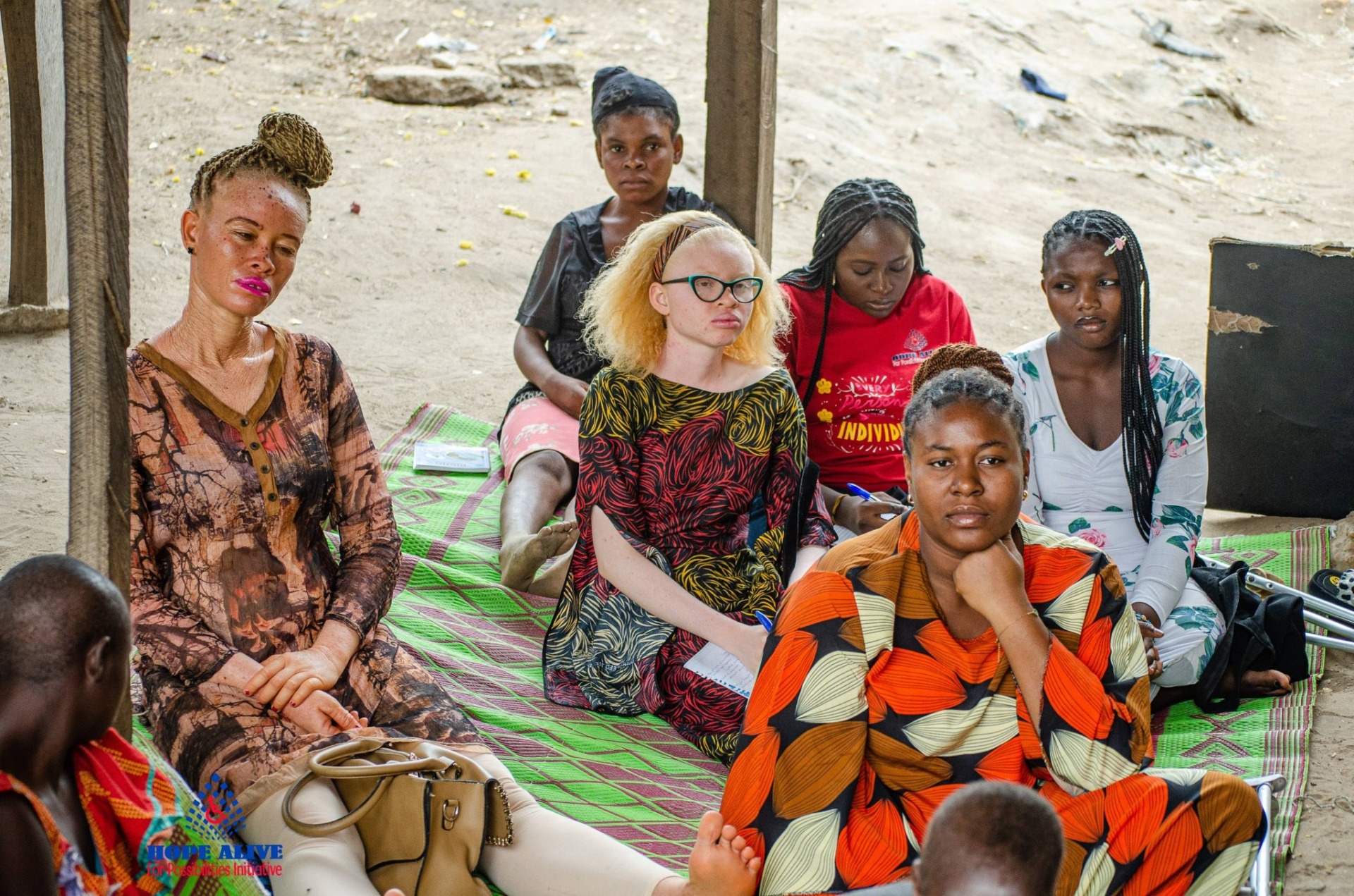
Hope Alive for Possibilities Initiative (HAPI) Group picture of storytelling and experience-sharing session with Women and Girls with Disabilities in Ichwa IDP, Makurdi, Benue State
The Overlooked Gaps in Humanitarian Menstrual Health Programming
The stories shared by participants revealed systemic failures in how menstrual health is addressed within humanitarian settings, particularly for girls and women with disabilities.
- Inaccessibility in IDP Camps
Toilets, bathing areas, and water points in many camps remain physically inaccessible. For girls with mobility impairments, this means dependence on others for basic hygiene — or avoiding facilities altogether.
- Poverty and Impossible Trade-offs
Inflation and economic hardship force women and girls with disabilities to choose between food and menstrual products. In crisis contexts, dignity becomes negotiable.
- Lack of Privacy and Safety
Overcrowded shelters and insecure camp environments make it nearly impossible to change menstrual materials confidentially. Privacy is not treated as essential — yet it directly impacts health, protection, and mental well-being.
- Information Gaps
Accessible, disability-responsive menstrual health information is largely absent in humanitarian programming. Materials are rarely available in formats suitable for persons with visual, hearing, or intellectual disabilities.
These are not isolated challenges. They reflect structural gaps in humanitarian response design.
Disability and Displacement: Layered Vulnerabilities
An important dynamic emerged during the session. Girls with disabilities from non-camp communities engaged alongside displaced girls. While they shared similar impairments, their experiences differed significantly.
Displacement compounds disability.
Living in an IDP camp adds layers of vulnerability — reduced autonomy, heightened safety risks, and limited access to resources. Shared disability does not guarantee equal experience.
Humanitarian actors must recognize this intersection.
What Menstrual Dignity Really Means
When asked to define menstrual dignity, participants did not speak in abstract language. They identified clear, practical priorities:
- Reliable access to water for bathing and hygiene
- Privacy and safety to change menstrual materials
- Accessible toilets that can be used independently
- Accurate, accessible menstrual health information
These are not luxuries.
They are basic human rights.
Why Policy Must Move Beyond Tokenism
Menstrual health conversations often happen at high-level conferences, policy tables, and donor meetings. But when girls with disabilities are absent from those conversations, strategies fail.
Designing humanitarian response without disability-inclusive consultation:
- Reinforces exclusion
- Misses real barriers
- Perpetuates indignity
Inclusion is not symbolic. It is operational.
The Way Forward: Integrating Menstrual Dignity into Humanitarian Response
Menstrual dignity must be embedded into:
- Protection frameworks
- Public health programming
- Gender equality strategies
- Disability inclusion policies
If humanitarian systems are serious about “leaving no one behind,” they must centre the voices of girls with disabilities — not as beneficiaries, but as stakeholders.
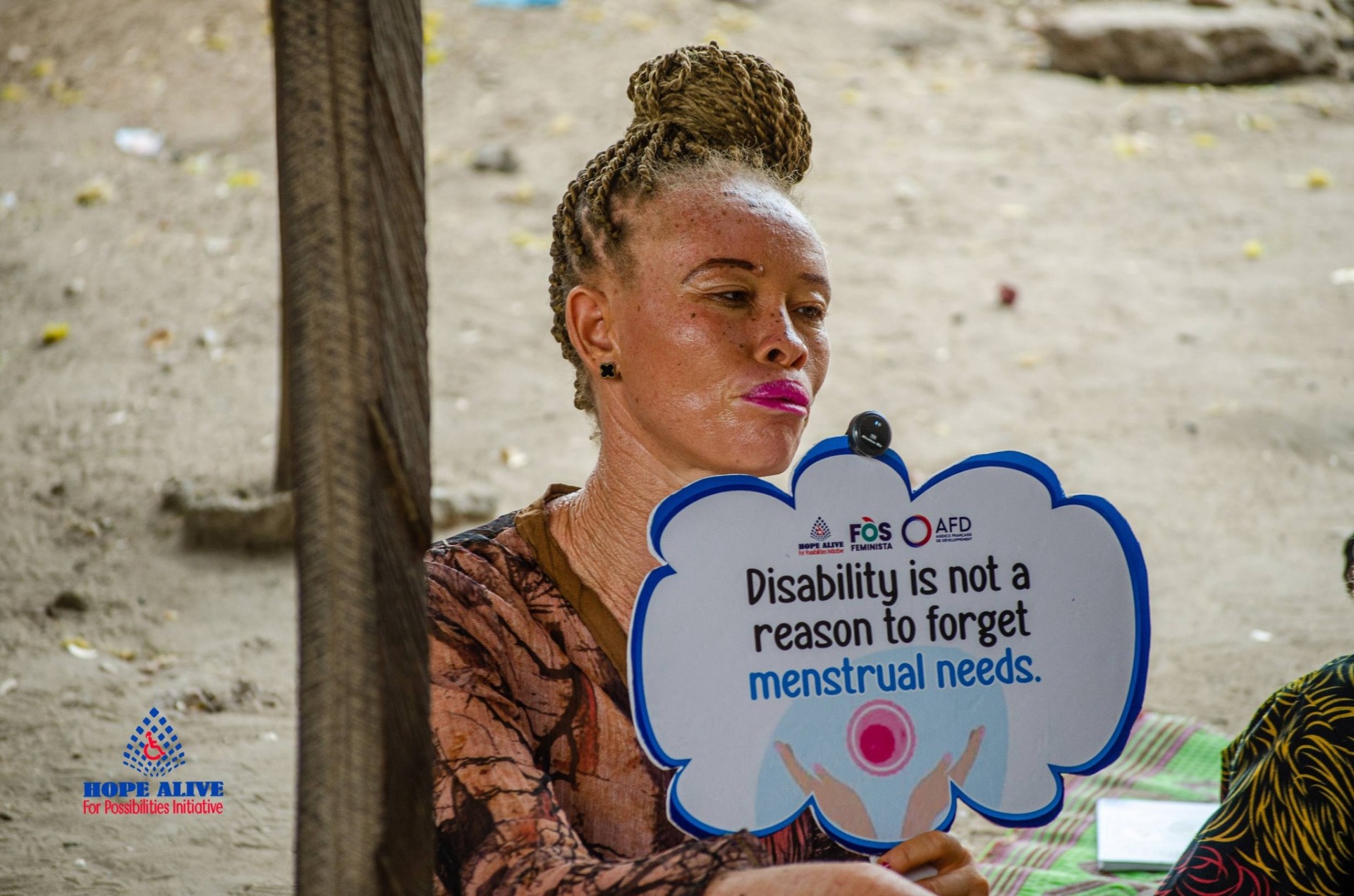
A woman with albinism pays rapt attention
At HAPI, we remain committed to ensuring that menstrual health in Benue State reflects lived realities, not assumptions.
Because menstrual dignity is not a side issue in crisis response.
It is central to protection, equality, and human rights.
Add Comment